
Want to Register a Private Limited Company but Have Only One Founder? What Are Your Options?
19 Nov 2026 - Registrations

You can start a company as a solo founder, but an ordinary private limited company needs at least two members and two directors. If you want to remain the only member, a One Person Company (OPC) may be the better starting point; it needs a nominee, who has a different role from a shareholder.
Your choice affects who owns the business, who can make decisions and what happens when you want to bring someone else in. This guide takes you from that decision through the documents, MCA filing, cost categories and obligations that follow incorporation.
1. Want to register a private limited company with one founder? Choose your structure
Indian company law gives a solo entrepreneur two company routes worth comparing. You can form an OPC with yourself as its sole member, or form an ordinary private company with another person as a genuine member. An OPC is itself a type of private company under the Companies Act, 2013; the distinction in this guide is between an OPC and a private company with two or more members.
Question | OPC | Ordinary private company |
|---|---|---|
How many members at formation? | One | At least two |
How many directors at minimum? | One | Two |
Is a nominee needed? | Yes | No OPC nominee |
Can the founder be the only member? | Yes | No |
What if another person is to become a member? | The company must move out of the one-member structure | Additional shareholding can be planned within the applicable company law framework |
1.1 A genuine second member changes the decision
An ordinary private company can suit a founder who has a willing second member and expects to share ownership, whether immediately or later. The second person does not have to be a co-founder with an equal stake. The founder can retain a majority, but the other member must actually hold shares and have the rights attached to them.
A second member and a second director are separate requirements. One person may fill both roles if eligible and willing, but adding a shareholder does not automatically make that person a director. Think about who will own shares and who will participate in the board before choosing this route.
1.2 An OPC keeps membership with one person
An OPC can suit a founder who wants to own the company alone for now and has an eligible nominee. It gives the business a company structure without asking another person to take an immediate ownership stake. The nominee’s role is to provide for succession if the member dies or becomes incapable of contracting.
If your plan depends on another person taking shares soon, compare the work of changing the OPC structure with forming an ordinary private company from the outset. Converting later is a legal and filing exercise, not merely an edit to a cap table. The right choice depends on whether that future ownership change is a realistic near-term plan or only a possibility.
A sole proprietorship is another way to trade alone, but it is not an incorporated company. An LLP involves partners and is not a one-person substitute. For startup company registration, choose the legal structure first; any separate recognition or business-specific approval is a different question from incorporation.
2. Who qualifies, and which roles must be filled?
Before gathering documents, establish whether the people you have in mind can and will take the required roles. The basic company requirements are found in Sections 3 and 149 of the Companies Act, 2013. The Ministry of Corporate Affairs (MCA) administers company incorporation through MCA21.
2.1 Members and directors
Ordinary private company: Arrange at least two members and two directors. A person may be both a member and a director, but the company still needs the required number of people in each role.
OPC: Arrange one member, at least one director and a nominee. The sole member may also be the director.
Director eligibility: A proposed director must be eligible to hold office and willing to accept its duties. The position should not be treated as a signature-only favour.
Resident director: Each company must meet the resident-director requirement in Section 149(3). For a newly incorporated company, the statutory requirement applies proportionately at the end of the financial year in which it is incorporated.
2.2 OPC member and nominee
Under the Companies (Incorporation) Rules, an OPC’s member and nominee must meet the applicable individual eligibility conditions. Indian citizens, whether resident in India or otherwise, can qualify; the rules also restrict participation in more than one OPC. A minor cannot become a member or nominee of an OPC.
Citizenship, residence, an existing OPC connection or a proposed director’s eligibility can affect the plan. These are route-selection questions: resolve them before spending money on a name, signatures or an application.
2.3 Resident director
Section 149(3) ordinarily refers to a director who stays in India for at least 182 days during the financial year. The first-year proportionate rule matters if incorporation takes place partway through that year. A director’s role and their time in India should be considered together, especially when the founder expects to spend long periods abroad.
3. What should you agree with the other person?
3.1 If you add a shareholder
Decide the proposed shareholding in actual numbers, not just a casual promise of “a small stake.” Record how many shares each member will take, what each will contribute and what percentage the resulting holdings represent. Consider the share capital needed for the business as well as the initial ownership split.
Discuss what happens if either person wants to leave, stops contributing or disagrees with a future investment. A shareholding gives the second member an interest in the company; it is not the same as lending their name to satisfy a form. The company’s articles, any shareholders’ agreement and applicable law all matter when those questions arise.
Also separate board decisions from shareholder decisions. A founder who owns most of the shares should not assume that every board action can be taken alone. If the second member will also be a director, explain the records they will see, the decisions they will make and the responsibilities they accept.
Before settling on a small second stake, ask a practical exit question: if the relationship changes, how would the shares be valued and transferred? Agreeing on an approach early can be easier than negotiating after a dispute.
3.2 If you select an OPC nominee
Choose someone who understands the succession role and is prepared to consent. The nominee is not an extra founder and does not receive an immediate share merely by being named. Their role becomes relevant if the sole member dies or becomes incapable of contracting, subject to the statutory framework.
Make sure the nominee can be contacted in future and knows that the appointment can require action if circumstances change. If the person is unwilling or unsuitable, choose another eligible individual rather than assuming a relative must accept the role. Keep the choice separate from any personal estate-planning arrangements you may also want to make.
4. Documents to prepare before filing
The exact attachments depend on the people involved and the details entered in the application. Prepare clear, legible copies and use the MCA form instructions to determine the applicable attachment format. This checklist is organised by what each item establishes.
Identity and tax details: PAN and identity particulars for the individuals whose details are required establish who the subscribers and proposed directors are. Additional identification may be relevant to the person’s circumstances.
Address details: Residential address proof supports the particulars of the individuals named in the application. Use documents and dates that meet the current form instructions.
Registered-office evidence: The application needs the proposed office address and the applicable proof of the company’s right to use it, including the owner’s permission where required. This establishes where the company can receive official communications.
Director consent: Consent to act as a director, including Form DIR-2 where applicable, records the proposed director’s agreement to take office.
OPC nominee consent: Form INC-3 records the nominee’s consent. The nominee’s identification details and supporting attachments are also relevant to that filing.
Constitutional documents: The memorandum of association sets out the company’s objects and subscription details; the articles of association contain its internal rules. The applicable electronic forms or attachments depend on the filing circumstances.
Digital signatures: Obtain the digital signature certificates needed by the people who must sign the electronic forms. These support execution of the online application.
Prepare a short description of the intended business activity, proposed names and the initial capital and ownership details alongside the formal documents. They are inputs for the application and its constitutional documents, even though they are not all separate certificates. A founder using a filing professional should still review the proposed entries before signing.
5. What is the procedure to register a company?
The company registration process has three stages: prepare the decisions and inputs, submit the application through MCA21, and respond to the outcome. Both routes use the MCA’s incorporation framework, but the details entered must match the company type chosen.
5.1 Preparation
Choose the company type and participants. Decide between an OPC and an ordinary private company, identify the people taking each role and settle the initial ownership plan.
Prepare names and business particulars. Select a proposed name that reflects the business and is suitable under the applicable naming rules. Have an alternative ready in case the first choice is unavailable or unsuitable.
Assemble the required inputs and signatures. Bring together the documents listed above, arrange the necessary digital signatures and agree the details to be entered in the company’s constitutional documents.
Access MCA21 and start SPICe+. Use the MCA portal to begin the incorporation application. SPICe+ Part A deals with name reservation; Part B collects incorporation particulars. Depending on the route chosen in the portal, the parts can be handled together or sequentially.
Complete the linked incorporation forms. Enter the company, office, capital and participant details and prepare the applicable linked forms and attachments. These can include the electronic memorandum and articles, declarations and AGILE-PRO-S for services covered by that form. An OPC application also needs its nominee particulars and consent.
Review, sign, submit and pay. Check the complete application as a set, arrange the required digital signatures and submit it on MCA21 with the applicable charges. Retain the submission acknowledgement and reference for tracking.
Monitor the application and act on the response. Review portal communications. If the Registrar seeks resubmission or correction, address the specific points raised and submit the corrected material through the prescribed route.
Keep the incorporation records. Once approved, retain the certificate of incorporation and the filed documents. Use the company details issued through the integrated process for the next business and compliance steps.
5.2 Submission on MCA21
SPICe+ is the integrated incorporation application, also known as Form INC-32. The linked forms depend on the company and the services selected; a founder should not assume that every optional registration applies to the business. The application’s entries should tell one consistent story about the company type, its people and its proposed activities.
If you engage assistance for Private Limited Company Registration, ask who will prepare the application, who will review it and who will respond to an MCA query. You remain responsible for understanding the roles and ownership details you approve.
5.3 After submission
Submission is not the same as incorporation. The Registrar examines the application, and the outcome may be approval or a request requiring further action. Keep access to the portal account and the application reference so a request does not sit unnoticed.
After approval, check the certificate and filed particulars against your records. The certificate establishes incorporation; it does not replace separate licences or registrations that may be needed for a particular activity.
6. What does registration cost?
There is no single reliable incorporation price for every founder. The company type, proposed capital, applicable stamp duty, signatures and scope of professional work can change the total. Ask for an itemised estimate rather than judging the choice by one advertised figure.
Cost item | What it covers or depends on |
|---|---|
Government filing charges | Applicable MCA charges for the application and related filings; the amount depends on the filing particulars and current rules. |
Stamp duty | Duty applicable to incorporation documents; the amount can vary with the relevant state or union territory and company particulars. |
Digital signatures | Certificates needed for electronic signing; the cost depends on the provider and how many eligible signatories need them. |
Professional assistance | Preparation, review and filing work if you hire help; ask whether resubmission and post-incorporation work are included. |
Later compliance | Accounting, audit and statutory filings after incorporation; these are separate from the initial filing quote. |
Compare quotes on the same scope. One may include drafting the constitutional documents and handling a Registrar query, while another may price those separately. If you expect a future investment or change of structure, budget for the advice and filings associated with that decision as well.
7. How long should you allow?
There is no fixed overall completion time that can be promised from the material available here. Allow time for your own decisions and document preparation, MCA processing, and any response to a query. The application’s submission date is only one milestone in that sequence.
Preparation can take longer when several people need to agree ownership, sign documents or supply information. After submission, the time taken depends on the application and the Registrar’s review. A resubmission adds another interval, particularly if the correction requires a fresh decision or signature.
Plan backwards from your business need. If a customer contract, bank account or proposed investment depends on incorporation, leave room for uncertainty rather than committing to an exact approval date. Track the application reference and make sure someone is available to respond when the portal communicates an outcome.
8. What obligations start after incorporation?
Incorporation creates a company that needs its own records, financial administration and statutory compliance. Keep company transactions separate from personal spending, and organise a system for retaining invoices, bank records, resolutions and filing acknowledgements. The workload continues even if the business has little activity.
8.1 Capital and commencement
Subscribers should pay for the shares they agreed to take. For a company with share capital, Section 10A requires a declaration concerning receipt of subscription money before the company commences business or exercises borrowing powers. The declaration is filed in Form INC-20A within 180 days of incorporation.
Arrange the company’s banking and capital contribution records so that the declaration is supported by the facts. Section 56 also sets a deadline for delivering share certificates to subscribers: within two months from incorporation. These are separate tasks from receiving the incorporation certificate.
8.2 Governance and reporting
Under Section 139(6), the board ordinarily appoints the first auditor within 30 days of registration, with a statutory procedure if it does not do so. Plan for accounting and the audit from the beginning rather than waiting until the first annual filing is due.
Section 173 requires the first board meeting within 30 days of incorporation. An OPC with only one director has a specific exception from the board-meeting provisions; do not assume the same exception applies merely because a company has one founder. Record decisions in the manner applicable to the company’s actual structure.
Annual financial statements and returns are continuing company obligations, subject to the rules and exceptions that apply to the company. OPCs have specific statutory treatment in some areas, so their compliance calendar should be prepared for an OPC rather than copied wholesale from an ordinary private company’s calendar. Tax filings and activity-specific registrations may also apply according to the business.
9. Mistakes that create avoidable delays or disputes
A person named as a shareholder or director has a substantive legal role. Treating that person as a temporary name on paper can create ownership disputes or governance problems after the company is formed.
Using inconsistent personal particulars: Differences between application entries and supporting records can trigger a query or correction. Compare names and other particulars across the relevant records before signing; if a record itself is wrong, correct it through the appropriate issuing process.
Choosing a name without considering availability or suitability: A preferred name may not be accepted. Prepare a distinct alternative and review the applicable naming requirements before relying on that name in contracts or branding.
Describing the business too narrowly or inaccurately: The proposed objects should reflect the intended activity. Review the wording with the person preparing the application instead of accepting generic text that does not fit the business.
Confusing control with sole ownership: A majority stake does not erase the other member’s rights. Put the ownership and exit discussions on the table before allotting shares, rather than trying to resolve them when someone wants to leave.
Ignoring an MCA communication: A query needs a timely, targeted response. Assign one person to monitor the application and keep the supporting records accessible so the response addresses the stated issue.
Assuming incorporation authorises every activity: A certificate forms the company; it does not automatically grant an industry licence. Identify any sector-specific permissions before starting a regulated activity.
10. Your next three steps
Choose the route: Select an OPC if sole membership suits the plan and you have an eligible nominee. Consider an ordinary private company if a genuine second member is available and shared ownership is part of the plan.
Make the people and ownership decisions: List the proposed member or members, directors and, for an OPC, nominee. Discuss the commitments each person is accepting and settle the proposed business details.
Prepare to file: Assemble the applicable records, obtain the needed signatures and decide whether to prepare the MCA application yourself or use assistance. Build post-incorporation work into your budget and calendar.
Begin the process online via the official government portal, or engage Company Register for end-to-end assistance
Need personalised advice for your business?
Share your query and our compliance team will connect with you shortly.
Frequently Asked Questions
Can a solo founder incorporate a company in India?
Is an OPC also a private company?
Can the same person be a shareholder and a director?
Does an OPC nominee own shares immediately?
Can a founder retain most of the shares in an ordinary private company?
Can an OPC bring in another shareholder without changing its structure?
What is filed on MCA21 to incorporate the company?
Is the certificate of incorporation the only post-registration requirement?
Recent Blogs
 20 Nov 2026 - Licenses
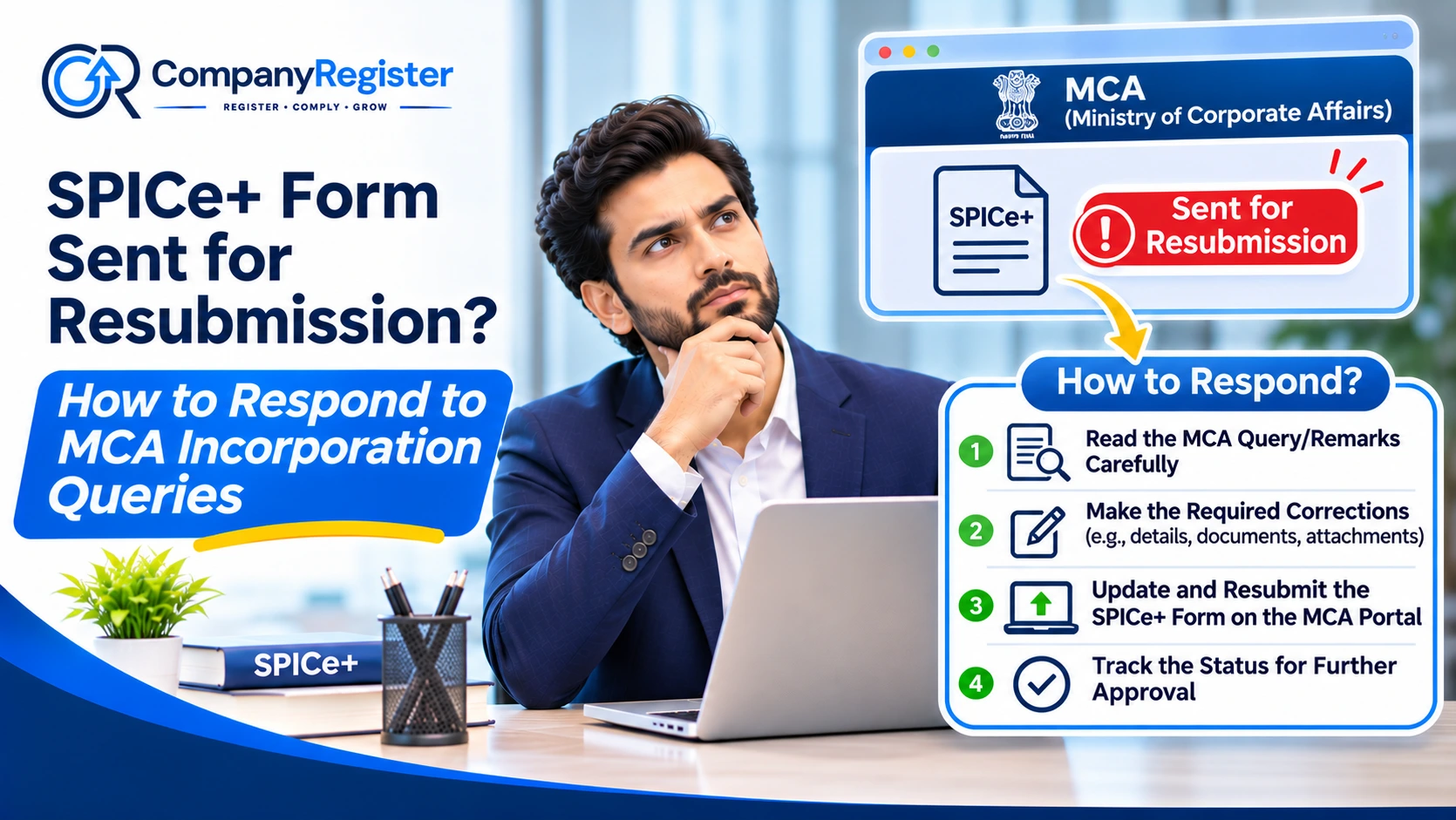
SPICe+ Form Sent for Resubmission? How to Respond to MCA Incorporation Queries
Respond to MCA incorporation remarks with a document checklist, MCA21 steps, a cost breakdown, deadline guidance and post-incorporation duties.
 20 Nov 2026 - Licenses
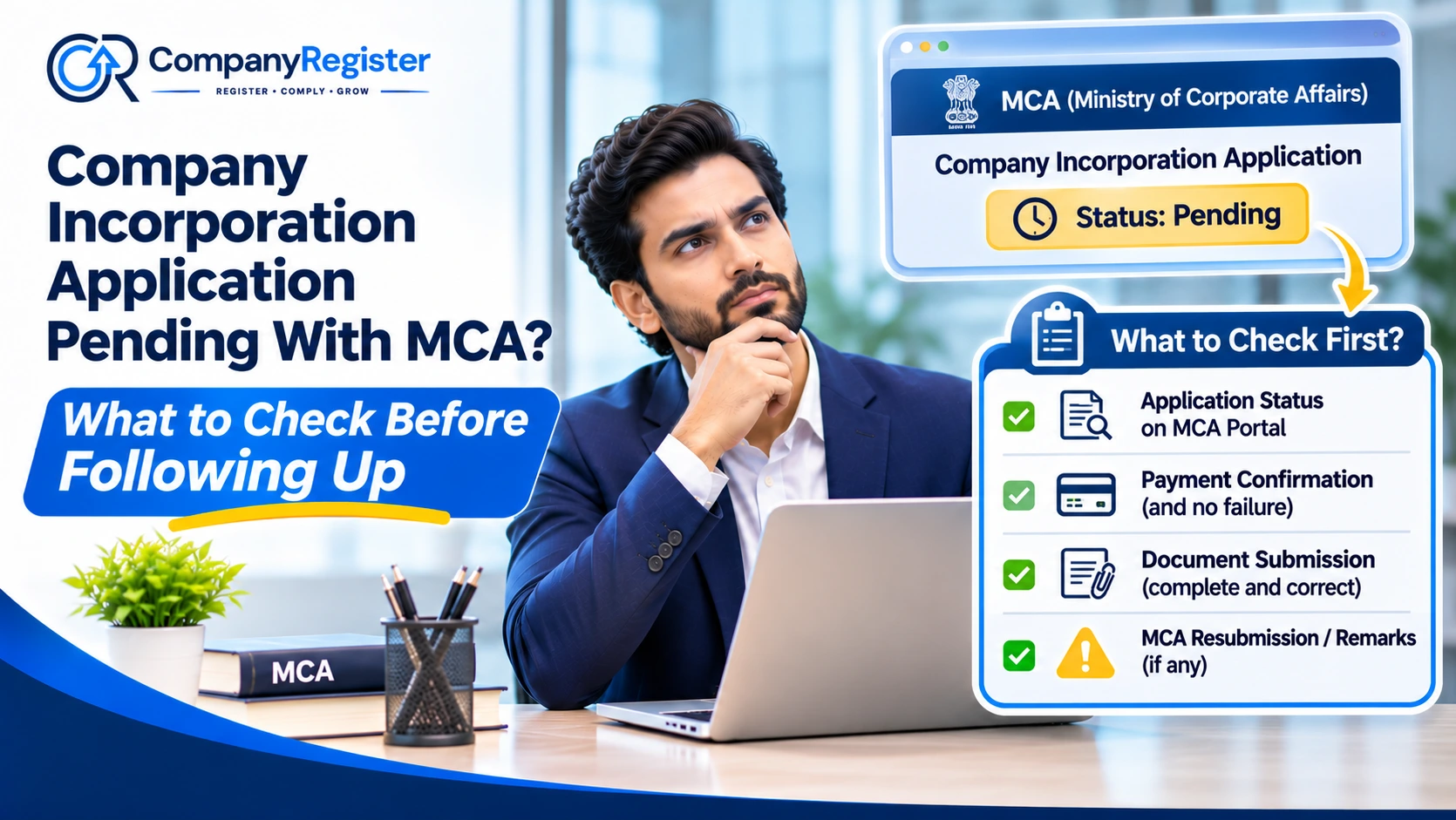
Company Incorporation Application Pending With MCA? What to Check Before Following Up
Check your MCA incorporation status, SRN and payment before following up. Understand SPICe+ documents, costs, processing stages and next steps.
 20 Nov 2026 - Licenses
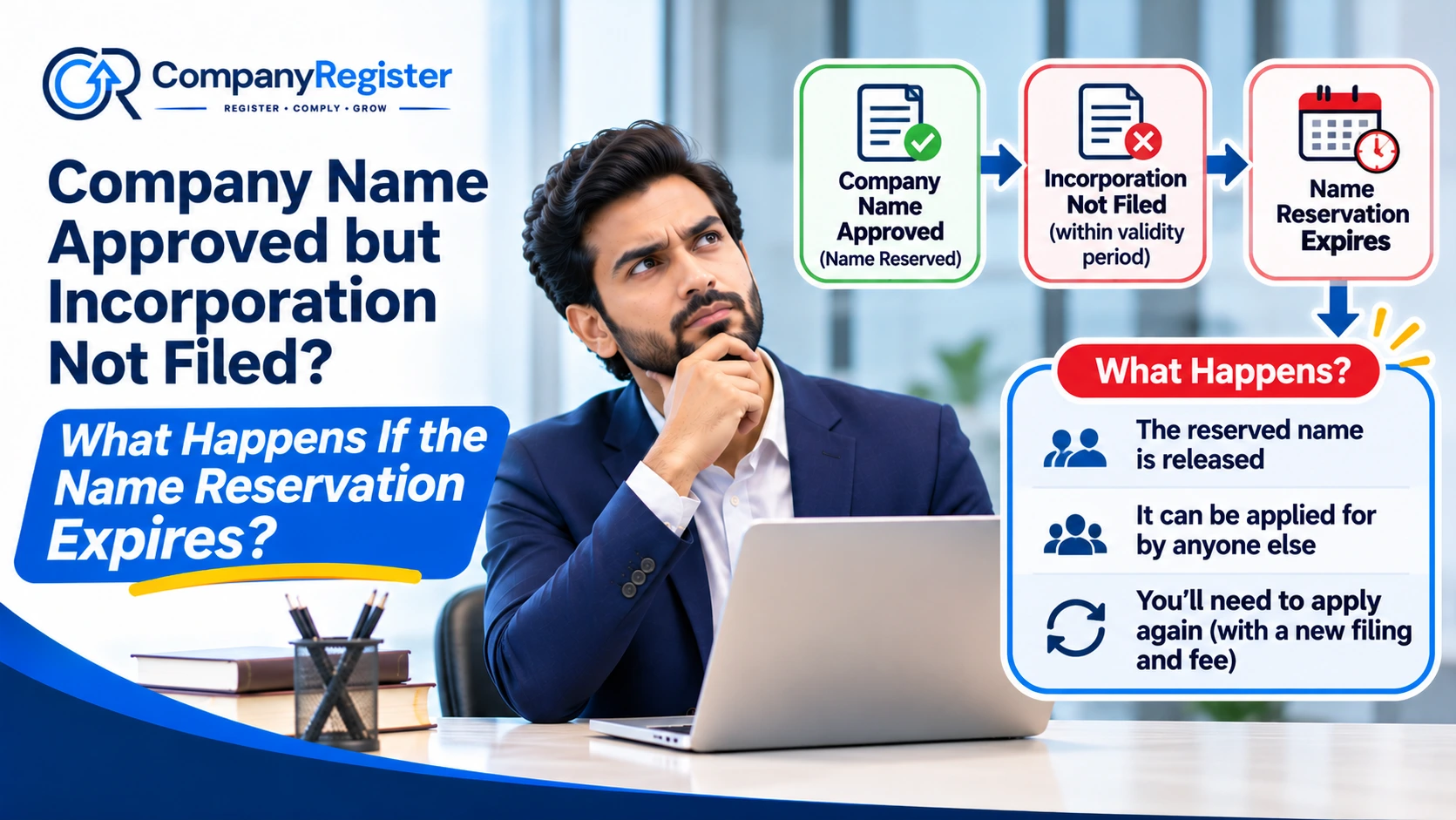
Company Name Approved but Incorporation Not Filed? What Happens If the Name Reservation Expires?
Learn when a reserved company name lapses, whether to extend or reapply, and what to prepare for SPICe+ filing, fees and incorporation.