
LLP Registered but LLP Agreement Not Filed? What to Do About Form 3
23 Nov 2026 - Licenses
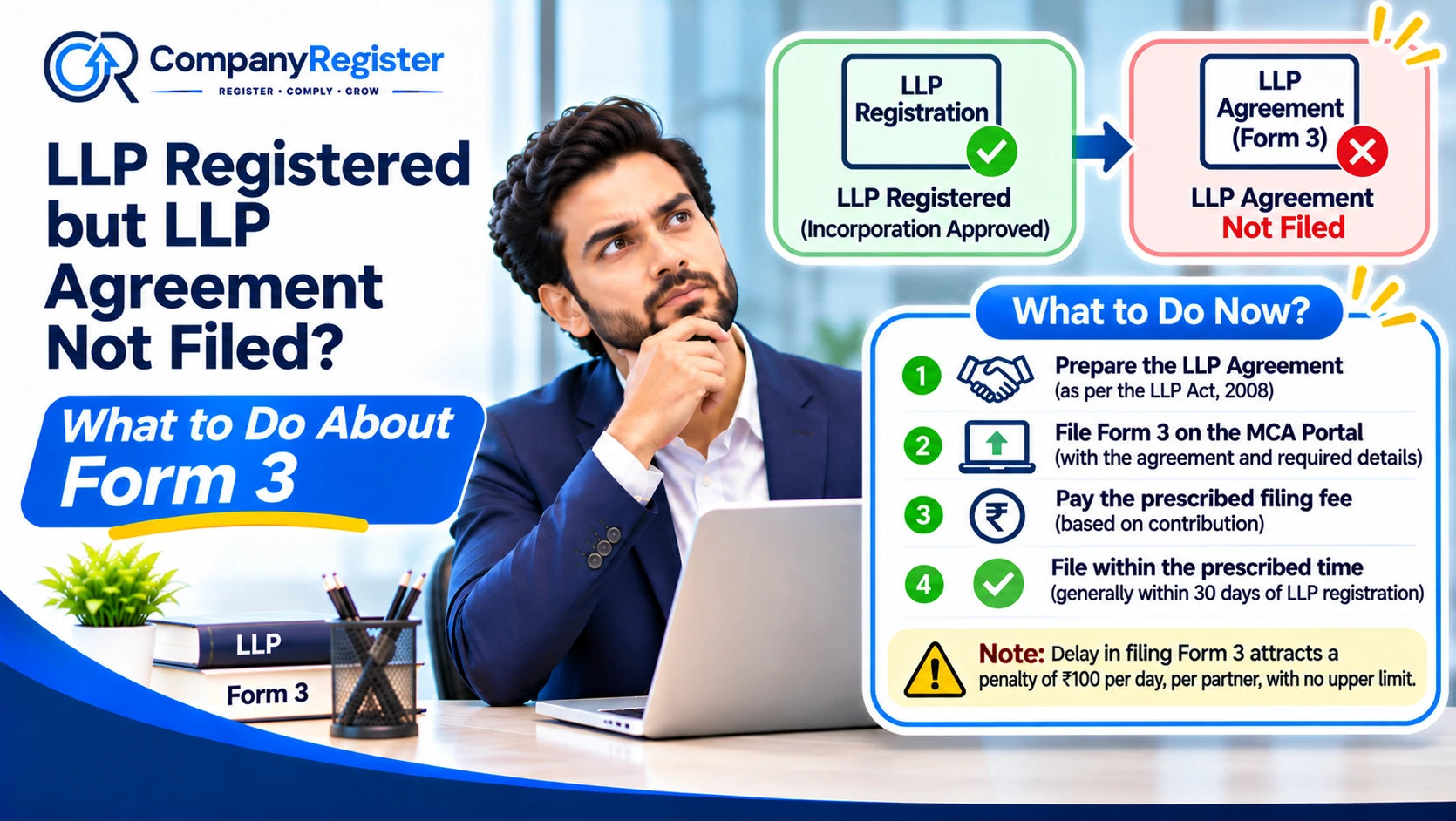
If your LLP is registered but its agreement has not been filed, establish whether the agreement was signed and whether an earlier Form 3 was submitted. An overdue agreement filing can generally be made through the Ministry of Corporate Affairs’ MCA21 portal, with the applicable filing and additional fees; the exact route depends on the LLP’s records and any later changes.
Start with the LLP registration certificate and the agreement history, rather than registering the LLP again. This guide separates the work into preparation, submission and follow-up so you can identify what you can handle yourself and where a disputed or complicated record needs specialist help.
1. LLP Form 3 late filing: establish what is outstanding
Form 3 is used to report information about an LLP agreement and changes to it to the Registrar. Section 23 of the Limited Liability Partnership Act, 2008 addresses the agreement and the partners’ mutual rights and duties; the LLP Rules prescribe the filing procedure. The LLP’s incorporation and its agreement filing are separate events.
1.1 Who can use this route
This guide is for an existing Indian LLP that needs to address its initial agreement filing or establish whether that filing was completed. It is also useful where partners know that an agreement changed later but cannot tell how the initial and subsequent records fit together.
The LLP has been incorporated and has an LLP identification number, or LLPIN.
The matter concerns the agreement or a change to it, rather than a fresh incorporation application.
The partners can establish who is authorised to act for the LLP and who will take responsibility for the filing.
The LLP can establish whether it has already submitted a Form 3, even if the submission’s outcome is unclear.
An incorporation certificate establishes that the LLP was incorporated; it does not by itself establish that a separate agreement filing was completed. Equally, an email from a service provider saying that a form was prepared is not necessarily evidence of its final disposition on MCA21.
1.2 Identify the underlying position
If the partners signed an agreement but no Form 3 was filed, the main task is to report the existing agreement accurately. If the agreement was never signed, the partners first need to settle and execute an agreement that reflects their actual arrangement. Do not treat an unsigned draft as an executed agreement.
A third position needs different handling: a Form 3 was submitted, but the LLP has only a payment receipt or an old reference number. Establish its portal status before starting another filing. If there have been changes since incorporation, reconstruct the sequence of agreements and filings rather than assuming the latest document alone tells the full story.
Where there is no agreement on a particular matter, Section 23 provides for the First Schedule to the LLP Act to govern mutual rights and duties to the extent applicable. That statutory default is relevant to the partners’ position, but it should not be treated as a substitute for resolving an outstanding agreement filing.
2. Documents and information to prepare
Keep a working file that separates documents intended for upload from records used to fill or review the form. The current MCA21 form determines which attachments and declarations it requires for the particular filing; a useful internal record is not automatically a mandatory attachment.
2.1 Agreement and execution evidence
Note for readers: the agreement is the central record. Keep a complete, legible electronic copy of the executed initial LLP agreement for the filing. Its terms help establish the partners’ agreed rights and obligations, contribution and other matters reported in the form.
Later agreement documents: retain signed supplementary or amended agreements, where they exist. Put them in date order so the person preparing the filing can identify what changed and which version applied at each stage.
Stamp-duty evidence: retain the stamped instrument and any associated payment or adjudication evidence available for it. LLP agreement stamp duty depends on the applicable state law and the instrument; the evidence helps establish how the document was executed.
Execution details: record the actual signing date and the identity of the signatories. If a partner is a body corporate, retain the relevant authorisation and representative details with the LLP’s records.
The agreement is more than an attachment. It is the source against which the form’s agreement-related information can be reviewed. If the partners never executed the draft they have found, they should resolve its terms and execution rather than presenting it as a signed historical instrument.
2.2 LLP identity and filing records
Certificate of incorporation: use the certificate to identify the LLP, its LLPIN and its incorporation date. Keep a readable copy in the working file even where the portal supplies identity details automatically.
Partner information: assemble the relevant names, identification particulars, roles and contribution information from the LLP’s records. These details support accurate form entries and help reconcile the agreement with the LLP’s recorded particulars.
Previous submissions: collect Form 3 copies, acknowledgement references, payment records and any portal communications. They help determine whether there is an existing filing and whether later documents belong to a separate change.
Decision records: keep available partner approvals and correspondence explaining agreed terms or changes. These can help establish the history when the signed documents do not answer a practical question.
For signing, the authorised designated partner needs a usable Digital Signature Certificate, or DSC, and the appropriate MCA21 access. The form may also require professional certification for the selected filing; use the current form’s certification instructions to identify what must be signed and by whom.
3. How to complete the filing on MCA21
The LLP Form 3 filing process has three distinct phases. Preparation establishes the facts; submission creates the electronic filing and payment trail; follow-up establishes what happened to that submission.
3.1 Preparation
Reconstruct the filing history. Put the incorporation, agreement execution, subsequent changes and any earlier submissions in chronological order. Record the source for each date so an assumption does not become a statement in the form.
Determine the filing purpose. Identify whether the outstanding matter is the initial agreement, a later change or an earlier submission that remains unresolved. Where both initial and subsequent events are outstanding, work out the appropriate sequence from the records and the portal’s requirements.
Settle the agreement position. If an agreement exists, use the executed version. If none was signed, have the partners agree and execute the document using the actual facts and dates. Resolve differences between partners before asking a designated partner to sign a filing.
Arrange access and signing. Use the LLP’s MCA21 account arrangements and the authorised signatory’s DSC. Establish in advance whether the filing requires a practising professional’s certification, so that the form is not left incomplete at the signing stage.
A founder can often prepare a simple, well-documented case with the partners’ cooperation. A more difficult history may require legal or professional help: for example, where the parties dispute what was agreed, the LLP has several unfiled changes, or a previous submission cannot be reconciled with the current record.
3.2 Submission
Go to the Ministry of Corporate Affairs portal, sign in to MCA21 and access LLP Form 3 through the available LLP filing services. Select the purpose that matches the event being reported. Portal labels and screens can change, so use the live form’s instructions rather than relying on an old screenshot.
Enter the LLP and agreement particulars requested for that purpose. Review the dates, parties and financial terms against the records before completing the form’s declarations. Attach the documents required by the live form, ensuring that each uploaded file is complete and legible.
Complete the prescribed signatures and any required certification, then submit the form and pay the charges shown through the portal. Save the acknowledgement and payment details. If a submission is interrupted, establish whether a transaction or service request was created before attempting to make another payment.
3.3 Post-submission
Use the service request details to follow the filing on MCA21. A payment confirmation shows a payment event; it should not be used on its own as proof that every filing requirement has been completed or that any review has finished.
If the portal or Registrar communicates a query or requests further action, read the communication against the submitted form and respond through the specified route. Retain the final status and any correspondence with the LLP’s own records. This creates a usable trail for the next person responsible for compliance.
4. What you may pay
The cost of an overdue filing has several components. The MCA charge, stamp duty and a professional’s invoice are separate items, and a single bundled quote can make it difficult to see which costs are controlled by the government and which depend on the work involved.
Cost component | What it covers or depends on | How to budget |
|---|---|---|
Normal MCA filing fee | The prescribed charge for the form, including the applicable fee category. | Use the current official fee schedule and portal calculation for the LLP’s particulars. |
Additional filing fee | An extra charge that may apply when the prescribed filing period has passed. | Budget separately from the normal fee; the amount depends on the applicable rules and delay. |
Stamp duty | Duty on the agreement or relevant instrument under applicable state law. | Identify the relevant state, instrument and any duty already paid; do not treat it as an MCA portal fee. |
Professional fee | Work such as reviewing records, preparing the filing or certification where required. | Ask for an itemised written scope and whether corrections or follow-up are included. |
A useful estimate is: normal MCA fee plus applicable additional fee, plus any stamp duty still payable, plus agreed professional charges. A professional may also quote separately for drafting an agreement or reconstructing old records. Ask whether taxes and out-of-pocket expenses are included in that quote.
A search for “MCA LLP Form 3 penalty” can lead to a misleading single figure. An additional filing fee is a charge connected with a late submission; it is not automatically the same thing as a statutory penalty or other liability. The circumstances and applicable law matter, and paying the portal charge should not be described as settling every possible consequence of the delay.
5. Deadline and processing milestones
5.1 The deadline clock
The initial agreement filing has a prescribed period linked to incorporation, while a later agreement change has its own filing obligation. Rule 21 of the Limited Liability Partnership Rules, 2009 is relevant to Form 3. For an LLP Form 3 overdue filing, establish the event and its actual date before calculating the delay; the date on which a founder discovers the omission is not necessarily the start of the clock.
For LLP agreement filing after 30 days, do not assume that a late charge can be worked out from memory or that a prior quote remains valid. Use the applicable official rules and the live portal calculation for the date of submission. Record both the event date and the submission date in the LLP’s compliance file.
5.2 What affects completion time
Preparation can take longer where partners must agree disputed terms, obtain old records or resolve stamp-duty questions. A straightforward signed agreement with a clear filing history may need less work, but a founder should not confuse preparation time with the time taken for the portal to process a submission.
After submission, the relevant milestones are payment, acknowledgement, any request for further action and the final status visible to the filer. Portal availability and the need to respond to a query can affect the elapsed time. No reliable official processing benchmark has been provided here, so plan for follow-up rather than promising a fixed completion date.
6. Errors that can hold up correction
Use this list as a review before signing. Each issue has a different remedy; submitting another form is not a universal correction for an uncertain record.
Assuming no filing exists: a duplicate attempt can make the history harder to reconcile. Use the LLP’s previous references and portal records to establish what was submitted and its status before choosing the next filing.
Using an invented or backdated execution date: the filing would then misstate the history. Record the actual signing date and seek advice on the effect of late execution if the parties intended an earlier arrangement.
Reporting a later agreement as though it were the original: this can obscure intervening changes. Build a dated document history and identify the appropriate filing purpose for each outstanding event.
Entering figures that do not match the governing records: inconsistent contribution or other agreement particulars can invite a query and make later compliance harder. Reconcile the source records and resolve the discrepancy before the authorised person signs.
Uploading an incomplete or unreadable instrument: a missing page or unclear signature can prevent the agreement from being reviewed. Compare the electronic copy with the complete executed document before submission.
Stopping at payment: the LLP may miss a request for further action. Assign one person to monitor the service request and retain the resulting communication and status.
Do not alter an agreement or filing date simply to make an LLP agreement delayed filing appear timely. A correct historical record is essential to a defensible correction.
7. Compliance after the agreement filing
Closing the initial agreement issue does not create a permanent filing exemption. If partners subsequently alter the agreement, assess the reporting required for that change and retain the signed document with the existing agreement history. Partner or other changes can also have separate reporting requirements; do not assume that an agreement filing covers every event.
Maintain a register or organised file of agreements, changes, partner decisions and MCA acknowledgements.
Assign a designated person to track annual LLP filings, including Form 8 and Form 11, and the applicable due dates.
Review tax registrations, returns and other business-specific obligations separately from MCA filings.
When responsibility passes to a new partner or adviser, transfer the agreement history, service request references and outstanding correspondence.
These are ongoing LLP post incorporation requirements and management tasks, not additional steps in the initial Form 3 submission. A shared calendar and a single document owner reduce the risk that a later change is agreed commercially but never passed to the person responsible for reporting it.
8. Choose your next three actions
Locate the history: gather the incorporation certificate, agreement versions and any MCA filing references. Decide whether the gap is an unsigned agreement, an unfiled agreement or an unresolved earlier submission.
Choose the level of help: handle a clear, agreed record through the portal if you are comfortable with the form and signing requirements. Obtain assistance when the partners dispute the history, several changes are outstanding or the earlier status cannot be reconciled.
Prepare a cost and follow-up plan: separate government charges, stamp duty and professional work; name the person who will monitor the submission and retain its final record.
Begin the process online via the official government portal, or engage Company Register for end-to-end assistance
Need personalised advice for your business?
Share your query and our compliance team will connect with you shortly.
Frequently Asked Questions
Can an LLP complete Form 3 after the filing deadline?
Does an incorporation certificate prove the LLP agreement was filed?
What if the partners never signed an LLP agreement?
How is the additional fee for an overdue Form 3 calculated?
Is stamp duty included in the MCA filing fee?
What if the agreement changed before the initial filing was completed?
Does paying the additional filing fee settle every consequence of delay?
What should founders retain after submitting Form 3?
Recent Blogs
 23 Nov 2026 - Licenses
One Partner Has Left Your LLP: What Should You Do If Only One Partner Remains?
Find the partner-change deadlines, Form 3 and Form 4 steps, documents, costs and personal-liability rules when one LLP partner remains.
 23 Nov 2026 - Licenses
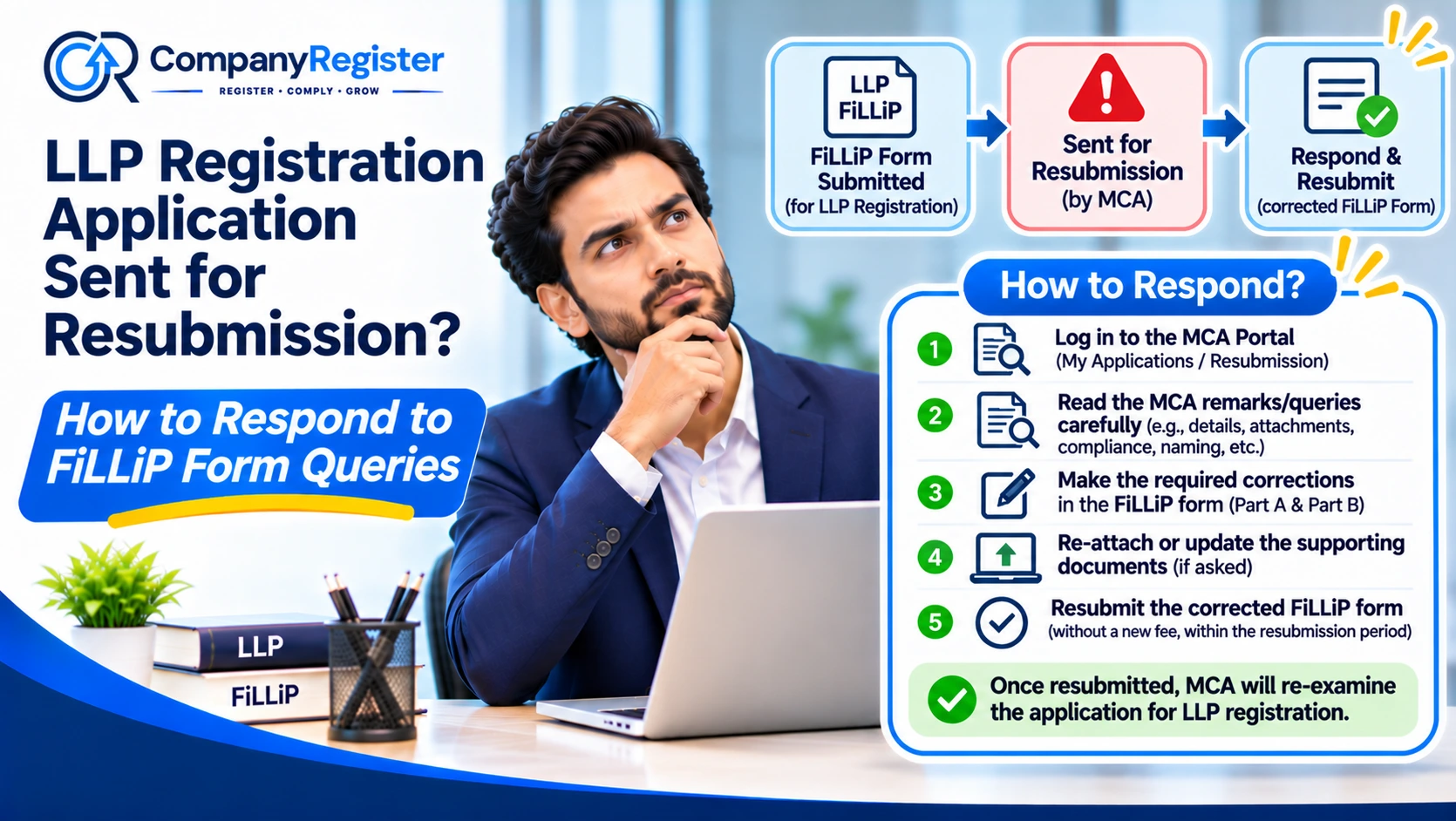
LLP Registration Application Sent for Resubmission? How to Respond to FiLLiP Form Queries
Respond to MCA FiLLiP remarks with a correction plan, relevant documents and portal submission steps. Understand costs, deadlines and next steps.
 23 Nov 2026 - Licenses
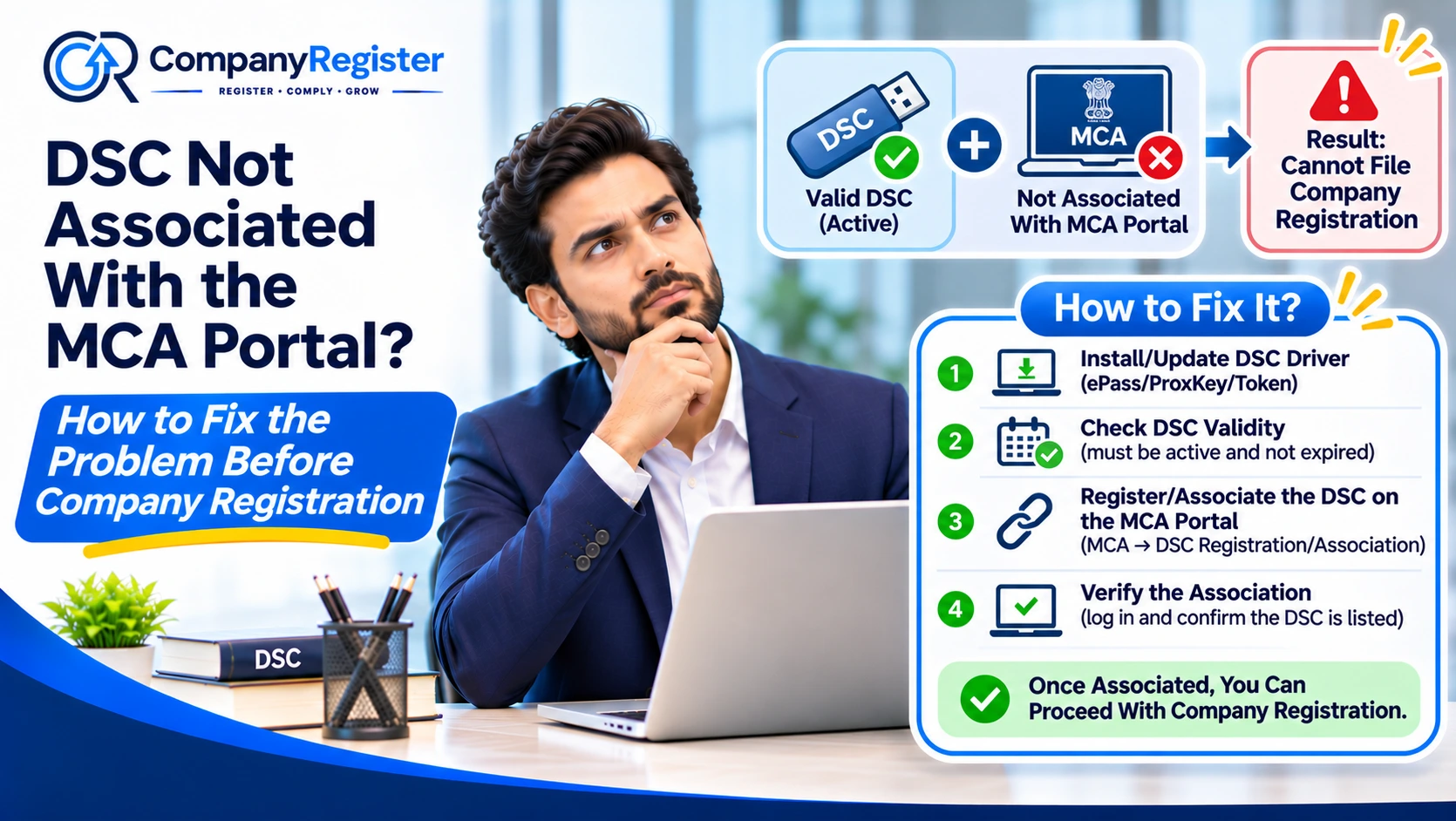
DSC Not Associated With the MCA Portal? How to Fix the Problem Before Company Registration
Identify the MCA DSC association error, prepare signatory details, follow the portal workflow and distinguish certificate costs from incorporation fees.