
Can You Register a New Company If a Proposed Director’s DIN Is Deactivated?
20 Nov 2026 - Licenses
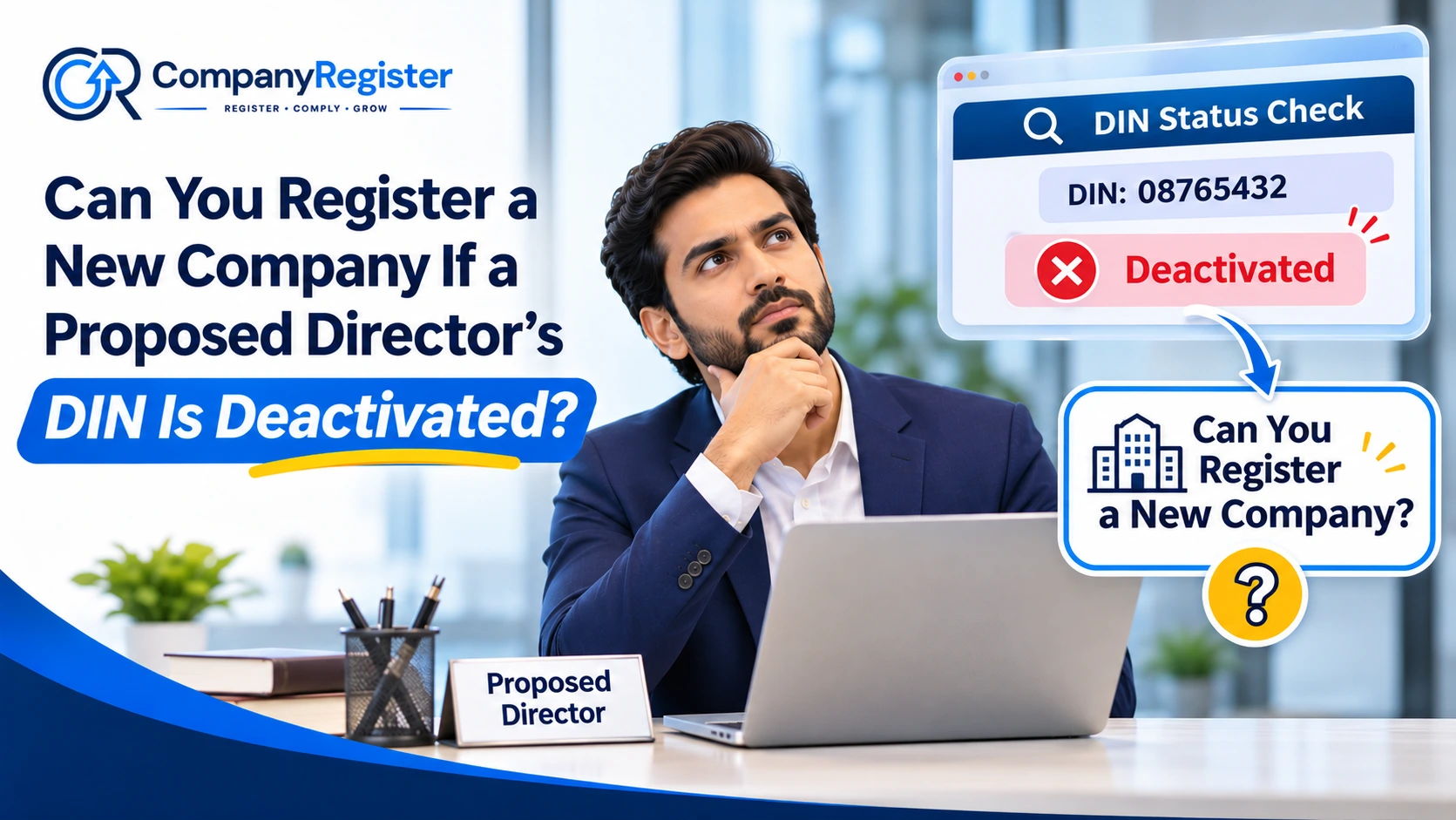
A deactivated DIN can hold up incorporation if the person is included as a proposed director. Where the DIN was deactivated for missed KYC, arrange the applicable MCA KYC filing and wait for the status to become usable before submitting the incorporation application with that person.
The alternative is to incorporate with a different board, provided the company meets the legal requirements and the people named genuinely agree to act. First establish why the DIN is inactive: a KYC lapse, a cancelled or duplicate DIN, and a director’s statutory disqualification are different issues.
This guide focuses on a first-time founder preparing an Indian company incorporation. It explains what to gather, how the DIN and company filings fit together, and which costs and time dependencies to plan for.
1. Company registration with deactivated DIN: eligibility and checks
1.1 Read the DIN status and reason
A Director Identification Number identifies an individual, not a particular company. If a person already has one, the incorporation application should use the appropriate existing DIN rather than treating the person as a first-time applicant.
Use the DIN status enquiry facility on MCA21 to look at the status and, where displayed, the reason. An approved or active status is a useful starting point for company incorporation DIN verification; a deactivated status tells you that the reason needs attention before relying on the number in the filing.
KYC-related deactivation: Identify whether the record indicates missed director KYC. The applicable KYC service is the starting route for restoring a DIN deactivated for that reason.
Cancellation, duplicate or another reason: Do not assume a KYC submission will resolve it. Establish which DIN remains valid and what the particular status requires.
Existing DIN: Match the number to the intended individual. Section 155 of the Companies Act, 2013 prohibits a person who has already been allotted a DIN from applying for or holding another.
Other restrictions: Review whether any separate legal disqualification or restriction affects the proposed appointment.
Deactivation due to non-filing of KYC does not, by itself, establish that a person is disqualified under Section 164 of the Companies Act. Equally, restoring a DIN does not remove a separate disqualification. These are two checks, with potentially different consequences.
1.2 Check the proposed board separately
For a private company, Section 149 requires at least two directors. An OPC requires at least one. The Act also has a resident-director requirement; assess the proposed board against the applicable rule rather than assuming that any available replacement will suffice.
A director must be an individual who is legally eligible and willing to take the role. If the proposed director’s participation is essential to the founders’ agreement, allow for restoration before filing. If it is not essential, a genuinely different board may be possible, subject to the company’s requirements and the proposed directors’ consent.
Changing the proposed board is a business decision as well as a filing decision. Directors participate in governance and may have access to company information and responsibilities after incorporation. A person should not be named merely to get past a portal obstacle without an agreed understanding of the role.
2. Documents and access to prepare
The director’s KYC record and the company incorporation application serve different purposes. The table is a preparation list; the attachments required in a particular MCA filing depend on the form, the applicant’s circumstances and the information entered. A document used to complete a field is not automatically an attachment to every form.
Item | Purpose and preparation |
|---|---|
Existing DIN and director particulars | Identify the correct person and retrieve or complete the director’s MCA record. Keep the person’s name and other particulars as reflected in the relevant records. |
PAN or applicable identity evidence | Supports identity particulars. An Indian individual’s PAN is relevant to MCA identity checks; a foreign national’s applicable identity evidence can differ. |
Address evidence | Supports the director’s address particulars when the applicable filing requires it. Prepare a legible copy in the format accepted by the relevant form. |
Director’s own mobile number and email access | Needed for electronic verification where the MCA service sends one-time passwords. The director should be available to receive and complete those checks. |
Digital Signature Certificate, where required | Enables an electronic signature on the applicable filing. Check whose signature is required for the chosen form and ensure the person can use it. |
Consent and declarations from proposed directors | Record willingness to act and the declarations required for incorporation. Form DIR-2 is relevant to consent to act as a director; the incorporation filing also calls for applicable declarations. |
Subscriber and company details | Identify the subscribers, proposed shareholding, company particulars and intended business activities for the incorporation application and constitutional documents. |
Registered office evidence | Supports the address entered for the company’s registered office, including evidence of the right to use the premises where required. |
For incorporation, prepare the proposed memorandum and articles of association in the form applicable to the company. SPICe+ uses linked incorporation forms for relevant documents and declarations. The exact combination depends on the company and the portal’s instructions, so a first-time founder should read the form guidance rather than assume that every linked form is identical for every application.
Where documents or declarations must be signed, keep the signed version and the submission-ready electronic copy together. If a professional is assisting, agree who will obtain signatures and who will retain the final records. That avoids discovering at submission that the person who can authorise the filing is unavailable.
If the registered office is owned or occupied by someone other than the company, arrange evidence of permission to use it as required by the incorporation filing. The address is a legal contact point for the company, so select premises where official communications can actually be received.
For a foreign national or an overseas document, the execution and certification requirements can differ from those for a domestic document. Resolve the applicable format before arranging signatures; simply having a scan does not establish that it is suitable for the proposed filing.
3. How to restore the DIN and submit the incorporation application
Keep the individual’s MCA KYC work separate from the company application, but manage them as one project. The following sequence is intended for a DIN shown as deactivated for KYC. A different status requires its own resolution before these steps can be used as the incorporation plan.
3.1 Preparation
Identify the record and its status. Use the MCA21 DIN enquiry facility and record the status, the reason shown and the date of the enquiry. Decide whether the intended director will remain on the proposed board.
Prepare the company filing in parallel. Settle the proposed company details, subscribers, shareholding and office arrangements. Preparing a draft is useful, but do not treat a draft as an accepted incorporation application.
Choose the applicable KYC service. For a KYC-related lapse, use the director KYC route available on MCA21. The MCA provides guidance for DIR-3 KYC Web; follow the current portal instructions for the filing and the applicant’s circumstances.
3.2 Submission
Sign in to MCA21 and complete the applicable director KYC service. Enter the requested particulars, complete the verification and signing steps presented by the service, and pay any charge displayed for that filing. Save the acknowledgement and service request number so the submission can be identified later.
Next, check the director’s status on MCA21. A payment receipt or a submitted request is evidence that an action was initiated; it is not the same evidence as a DIN status that the incorporation system will accept. Allow for the portal record to reflect the outcome before relying on that number in the company filing.
For the incorporation itself, use SPICe+ on MCA21. Part A deals with the proposed company name; Part B covers incorporation particulars and is accompanied by the linked forms applicable to the company. Founders can plan the name and incorporation information together, while respecting the route and choices presented on the portal.
Enter the proposed directors and subscribers in their respective capacities. A person may participate in the company in more than one capacity, but the information must reflect the actual arrangement. Complete the linked forms, obtain the required signatures and certifications, and submit the application with the applicable payment.
For founders who prefer assistance with that broader filing, Private Limited Company Registration is relevant where a private limited company is the chosen structure. Agree the scope of assistance separately from the government filing: director KYC work and incorporation work need not be the same engagement.
3.3 After submission
Retain the incorporation acknowledgement, payment record and final copies of the forms submitted. Monitor the application on MCA21 and respond to any communication through the applicable portal workflow. An application’s submission does not itself mean the company has been incorporated.
When the Registrar approves incorporation, use the certificate and company identification details as the starting point for the company’s subsequent work. Keep the director’s KYC acknowledgement with the director’s records and the incorporation documents with the company records; they evidence different actions.
4. Government charges and professional costs
Budget for the DIN issue and the company application separately. The MCA payment screen and applicable fee rules govern the government charges for the actual filing; a professional’s quotation is a separate commercial charge. The supplied source material does not establish a reliable current amount for each scenario, so the table identifies costs without giving an unverified total.
Cost category | What to establish before paying |
|---|---|
Director KYC or reactivation charge | Whether a government charge applies to the director’s chosen KYC submission and the amount shown for that case. |
Incorporation filing and related government charges | Charges applicable to the company’s filing choices and particulars, including any applicable stamp duty. |
Digital signature | Whether a required certificate is already available and usable, or whether acquisition or renewal is needed. |
Professional assistance | Whether the quotation covers the DIN issue, incorporation preparation, submission and responses to portal communications. |
Document preparation | Whether the circumstances require additional work on signatures, certification or documents executed outside India. |
Ask for an itemised quotation that distinguishes amounts paid to government from the service provider’s own fee. Also ask whether a later response to an incorporation query is included. A low incorporation quote can be misleading if the director’s separate KYC work is outside its scope.
Keep the MCA payment receipts even when a professional makes the payment on your behalf. They help reconcile the government charges against the invoice and identify the particular service request if a payment or submission needs follow-up.
5. Timeline: plan around milestones, not a fixed promise
There is no supported single turnaround time for a case involving both DIN restoration and incorporation. The useful planning unit is the milestone: director information ready, KYC submitted, DIN status reflected, incorporation submitted, and incorporation approved. Each has a different dependency.
For the first milestone, time depends largely on access to the director and the records needed for the applicable service. The restoration milestone can take longer if the case requires more than routine KYC or the portal has not yet reflected the outcome. A founder should track the actual status rather than count a submitted KYC request as completion.
The incorporation stage has its own variables, including the completeness of the application, the availability of signatories, portal processing and any Registrar communication. A response requested after submission adds work and may change the expected approval date. The incorporation certificate, rather than an internal target date, establishes when registration has occurred.
Work that does not depend on the DIN becoming usable can proceed in parallel: agree commercial terms among founders, prepare the intended company details and assemble office evidence. Work that does depend on the director’s usable record should remain a dependency in the launch plan. Avoid making commitments that require an already incorporated company until the certificate is available.
A practical schedule assigns one person to watch the MCA service request and another, if needed, to collect company approvals. Record the date of each acknowledgement and the next action expected. This helps the founders distinguish an item awaiting their own response from one awaiting a portal or Registrar outcome.
6. Mistakes that can interrupt the filing
Assuming every inactive status is missed KYC. A cancelled or duplicate record may not be resolved by the routine KYC route. Read the status reason and deal with the specific issue rather than repeatedly submitting the same remedy.
Seeking another DIN as a shortcut. Section 155 restricts a person from applying for or holding a second DIN after one has been allotted. Identify and resolve the existing record instead of creating a duplicate problem.
Treating DIN restoration as proof of director eligibility. A working DIN addresses the identification record; it does not decide every question under Section 164. Review any separate disqualification before finalising the board.
Submitting inconsistent particulars. If information entered in the KYC or incorporation filing conflicts with the relevant records, validation or review may be interrupted. Reconcile the underlying particulars and use the applicable correction route before resubmitting.
Using a replacement who has not agreed to the role. A nominal name may satisfy neither the founders’ governance needs nor the requirement for proper consent. Choose a willing, eligible individual and document the actual arrangement.
Assuming a submitted application is an approved company. Submission and incorporation are separate events. Track the application and wait for the certificate before presenting the entity as incorporated.
A SPICe+ director DIN error should be diagnosed from the message and the director’s actual MCA record. Repeatedly attempting the same submission without resolving the underlying status or particulars can waste time without changing the result.
If an error appears after a professional has prepared the filing, share the exact message and service request details rather than paraphrasing it as “DIN inactive”. The correction depends on what failed: the individual’s record, an entered particular, a signature or another part of the application.
7. What the company must do after incorporation
Once incorporated, the company has obligations of its own. The individual director’s MCA identification record also remains a personal compliance matter. Put both on a calendar instead of assuming that the incorporation filing completes ongoing compliance.
Board meeting: Section 173 requires the first Board meeting within 30 days of incorporation. Arrange notice, an agenda and a record of the decisions made.
First auditor: Section 139 provides for appointment of the first auditor by the Board within 30 days of registration for a company other than a government company, with a separate route if the Board does not appoint one.
Commencement declaration where applicable: Under Section 10A, a company incorporated with share capital must meet the applicable declaration requirement before commencing business or exercising borrowing powers. The declaration is filed in Form INC-20A within the statutory period, alongside the conditions stated in the provision.
Company records: Retain the certificate, constitutional documents, consents, statutory registers and meeting records. Give the people responsible for compliance access to the final filed versions, not just working drafts.
Director KYC: Track the director’s continuing KYC and any applicable updates using the current MCA requirements. Responsibility for the individual’s record should be assigned explicitly, even if the company’s adviser helps with the filing.
Business-specific registrations and tax obligations depend on the company’s activities and circumstances. They should be assessed separately; restoring a director’s DIN does not automatically register the company for every activity it intends to undertake.
Give the first Board meeting a working agenda rather than treating it as a formality. Founders can use it to allocate responsibility for records, banking arrangements and upcoming filings, while recording decisions made by the directors. Any action that requires a separate legal approval or filing still needs that step.
8. Choose your next move
Make the board decision. If the person with the inactive DIN must be an initial director, put restoration on the critical path. If the founders genuinely want a different eligible board, settle that arrangement and obtain the necessary consent.
Assign the work. Have one person obtain the MCA status and organise the director’s KYC, and another collect the company information and approvals. For an unusual status, overseas documents or uncertainty over eligibility, agree the scope and cost of professional help before filing.
Set the submission gate. Proceed with the intended director when the relevant MCA record is usable and the company application is ready. Keep the acknowledgements, track the outcome and move to the company’s post-incorporation calendar only when incorporation is approved.
Before payment, use the current MCA portal instructions and applicable fee schedule for the specific filing, particularly where the director’s record or circumstances need a route other than routine KYC. Begin the process online via the official government portal, or engage Company Register for end-to-end assistance
Need personalised advice for your business?
Share your query and our compliance team will connect with you shortly.
Frequently Asked Questions
Can a company be incorporated with a proposed director whose DIN is deactivated?
Does KYC deactivation automatically mean a director is disqualified?
Should a director apply for a new DIN instead of restoring the existing one?
Which MCA service is relevant to DIN KYC reactivation?
Can founders prepare incorporation while the DIN is inactive?
Can founders change the proposed board instead of waiting?
How much do DIN reactivation and incorporation cost?
How long does the combined process take?
Recent Blogs
 20 Nov 2026 - Licenses
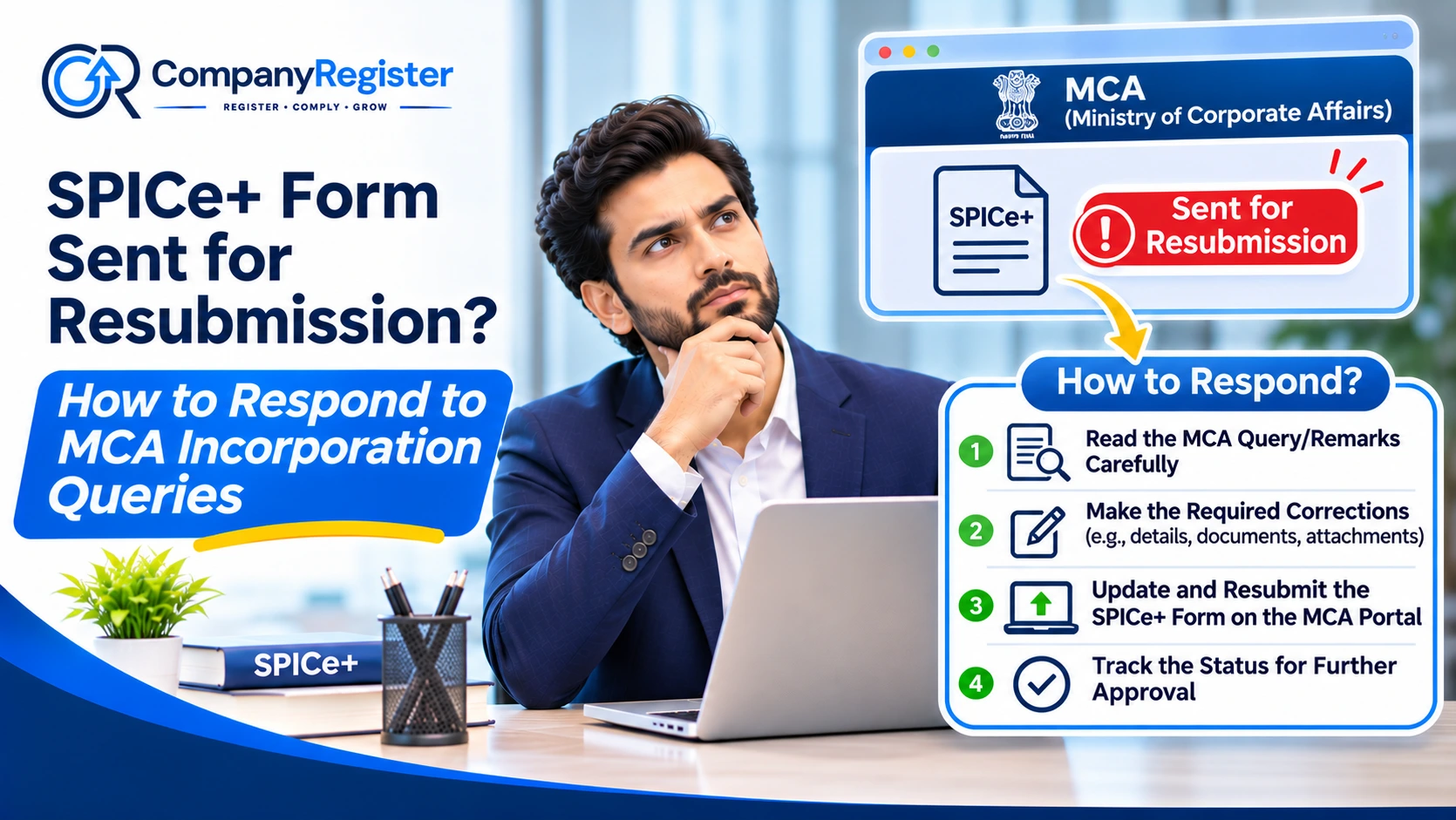
SPICe+ Form Sent for Resubmission? How to Respond to MCA Incorporation Queries
Respond to MCA incorporation remarks with a document checklist, MCA21 steps, a cost breakdown, deadline guidance and post-incorporation duties.
 20 Nov 2026 - Licenses
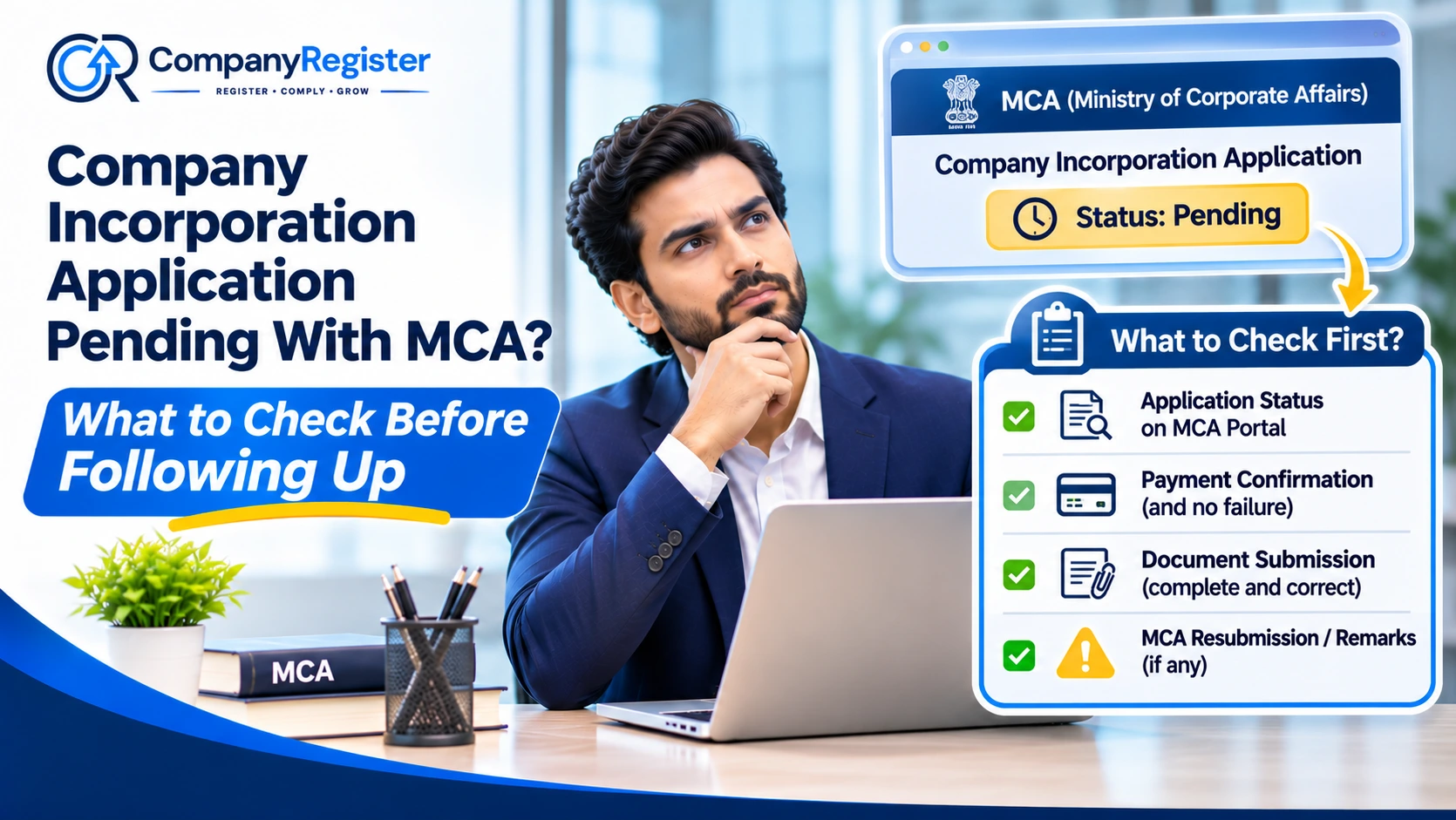
Company Incorporation Application Pending With MCA? What to Check Before Following Up
Check your MCA incorporation status, SRN and payment before following up. Understand SPICe+ documents, costs, processing stages and next steps.
 20 Nov 2026 - Licenses
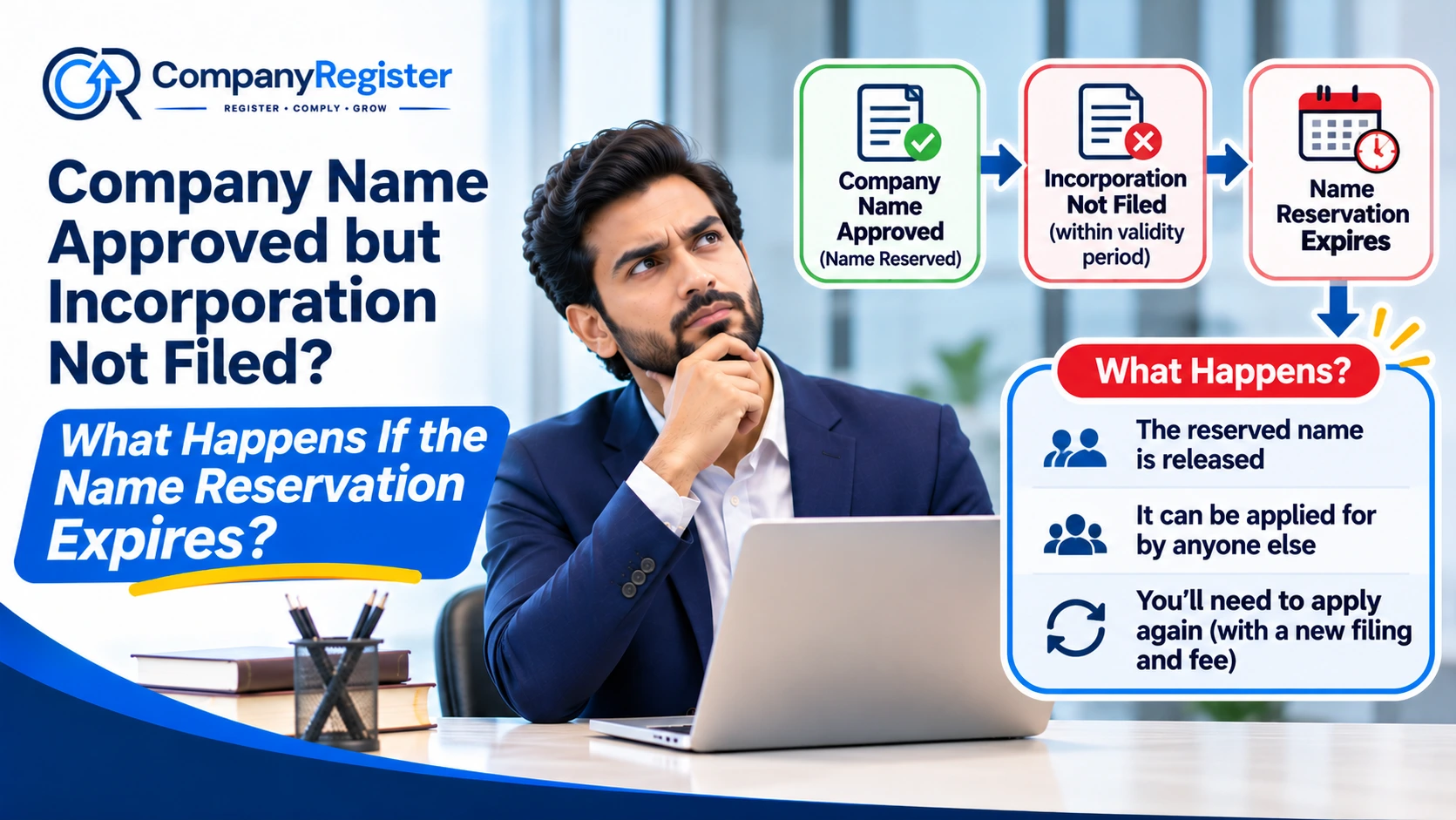
Company Name Approved but Incorporation Not Filed? What Happens If the Name Reservation Expires?
Learn when a reserved company name lapses, whether to extend or reapply, and what to prepare for SPICe+ filing, fees and incorporation.