Private Company vs Public Company: What Is the Difference?
22 Aug 2026 - Registrations
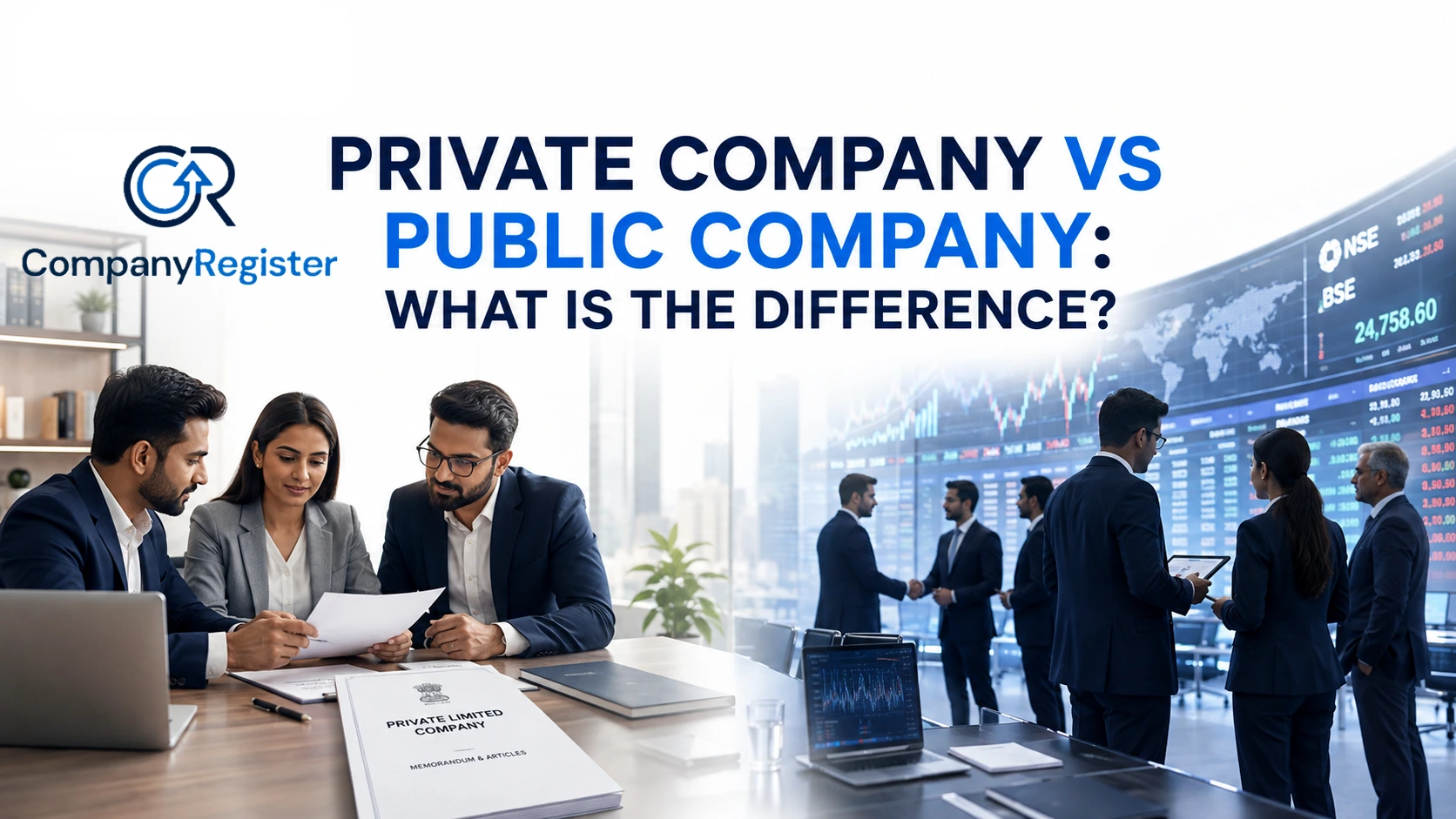
If you are thinking of starting a business then you have got to choose the right company structure before starting applications. Understanding the differences between the private company vs public company will help in choosing an appropriate structure based on the company's goals and financial needs.
What is a Private Company and Public Company?
The first question that you should ask yourself is what is private and public company? A private company is owned by a small group of people like investors or founders while a public company is the one which is run by selling its shares to the general public through an IPO.
The key differences between private and public companies, is that in public companies the shares are bought and sold freely to anyone in the stock market while in private companies the shares are held by a few people. There are strict rules enforced on who can buy the shares or transfer them.
If you are looking for better control over the ownership of the business, you should try Private Limited Company registration.
Difference between Private Company vs Public Company
The difference between a private company and public company stem from the structure of ownership, fundraising, regulations, and share transfer including:
- Ownership
- Number of shareholders
- Restrictions on share transfer
- Public fundraising
- Regulatory rules
- Disclosure obligations
Understanding the difference between private company and public company will help you select the right type of company.
How Do Private and Public Companies Differ in Ownership?
The difference between private and public companies can easily be observed. Private companies are owned by a limited number of shareholders and shares are not transferable. In contrast, public companies are open to public share purchase through stock exchanges as long as they meet the relevant legal requirements for doing so.
If you were trying to raise funds from the public with your business idea, you might need to register as a Public Limited Company right after checking out your plans to grow the company.
How Do Fundraising Opportunities Compare?
When it comes to fundraising possibilities, you need to know the difference between a private company vs public company. Private companies are generally financed by promoters, private investors, venture capitalists, or financial institutions. Public companies are able to access greater capital sums by selling their shares to the public.
The Difference between a private and public company often influences the time taken for your business to expand and also attract potential investors.
Compliance Requirements
In terms of compliance obligations, there lies a key difference between private company and public company. Since public companies are under duty towards public shareholders, they face stricter requirements in terms of disclosure and governance. On the contrary, matters concerned with regulatory compliance are generally less complex in case of private companies.
If you find it difficult to distinguish between private company and public company, compliance is an important aspect to consider when it comes to making a decision.
Which Company Structure Should You Choose?
When it comes to determining whether private and public companies ought to be chosen, the nature of your business goals plays a crucial role. In case you want to be in control of management of your company, then a private company is the best option for you. Meanwhile, if you are planning to raise money from the public through public investments, your best bet is to turn to the public company model.
When making your assessment of what is private and public company, these things you can consider include ownership, compliance, the size of the company and its development plans.
This table below clearly explains the private and public company difference, they are:
Basis | Private Company | Public Company |
|---|---|---|
Ownership | Limited shareholders | Public shareholders |
Share Transfer | Restricted | Freely transferable |
Fundraising | Private investors | Public issue of shares |
Compliance | Comparatively lower | More extensive |
Listing | Not listed | May be listed on stock exchanges |
Conclusion
Private company vs Public company guide helps y0u to know the structural comparison that supports your business goals.
If you want to retain ownership or you would like to enhance the business with greater or large scale fundraising, then recognising the difference between private and public companies can aid you choose wisely.